
The Unexpected Environmental Case for Robotic Mowers
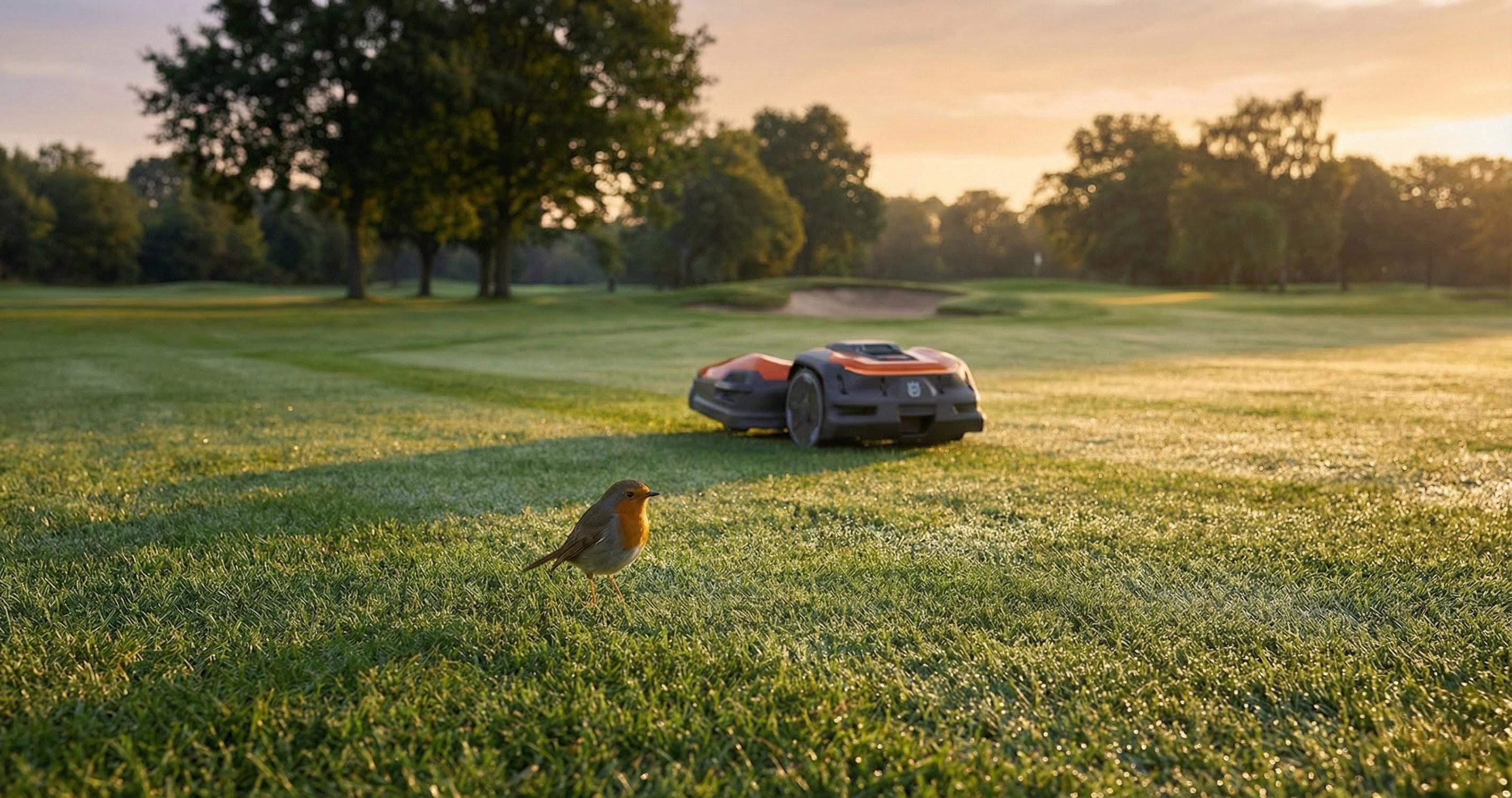
"You see a bird enjoying the yard while it's being mowed by a robot?" One of my friends asked me this last week. He paused, then answered his own question: "That bird wouldn't be enjoying the yard if you were racing through it on a gas-powered combustion engine."
That observation stuck with me. In this industry, we talk constantly about labor savings. We build ROI models. We calculate efficiency percentages. We obsess over the spreadsheet math of automation.
But we rarely talk about the environmental silence.
The superintendent continued: "The wildlife around it doesn't really care. The robot is just... there." And that got me thinking about all the other things that "aren't there" anymore when you switch to automation.
The "Ring Around the Tree" is Gone
Every superintendent knows the ring. It's that subtle (or not-so-subtle) depression around tree bases and tight turns where 4,000-pound machines pivot and crush the root systems.
We've accepted soil compaction as a necessary evil of maintaining a golf course. You want cut grass? You have to drive heavy machinery over it. Repeatedly. Forever.
But look at the physics:
- Traditional Fairway Mower: ~3,000–5,000 lbs
- Commercial Robotic Mower: ~50–150 lbs
When you replace a two-ton machine with a 70-pound robot, the math changes instantly. The "ring around the tree" disappears. The ruts in the wet spots vanish. The root systems breathe.
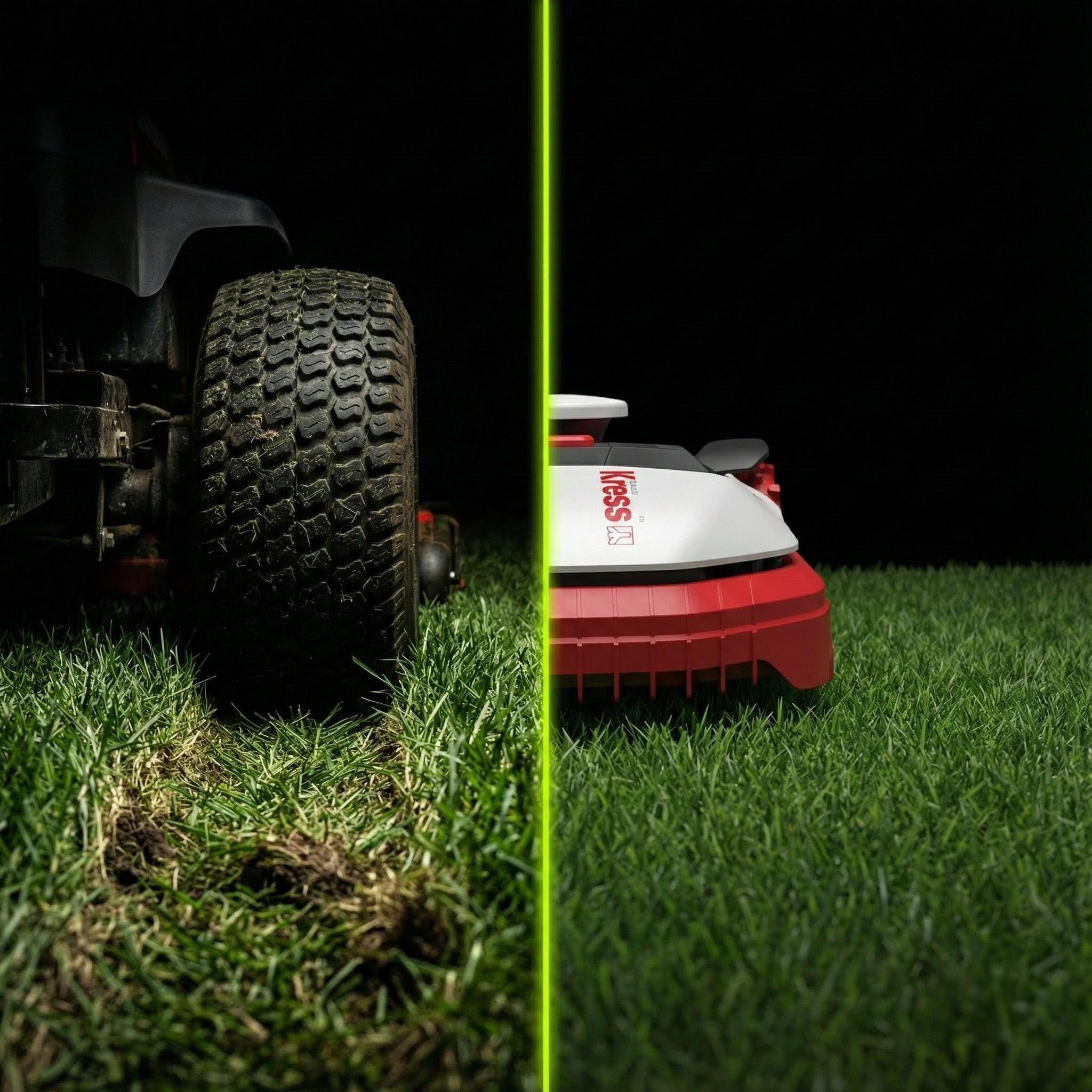
"I wish I had the scientific data to prove what I see. But the ring around the tree... I'm just not seeing that this year."
The Wet Clay Advantage
Here in the Southeast (and plenty of other regions), clay soil dictates our schedule. If it rains hard on Monday, you aren't mowing on Tuesday. If you try, you'll tear the place apart.
This creates a scheduling nightmare. Rain delays pile up. Grass gets shaggy. Then you have to send crews out to double-cut just to catch up, burning overtime and fuel.
Robots don't care about wet clay.
Because they are so light, they can often mow the very next morning after a heavy rain. No ruts. No tearing. Just a consistent cut height, maintained every single day.
The Emission Math
Running a traditional gas mower for one hour produces as much pollution as driving 8 new cars at 55 mph for the same amount of time. Multiplied across a fleet, the emissions reduction from going electric is massive.
Silence is a Member Amenity
I didn't expect this to be a major selling point, but for private clubs, it's huge.
Think about the member experience on a Saturday morning. They're teeing off on the 4th hole. The birds are singing. The sun is coming up.
And then: RRRROOOAAARRRR.
A gas mower fires up two holes over. The spell is broken. The peaceful escape they pay thousands of dollars for is interrupted by industrial noise.
Now replace that with electric autonomy. The robots are nearly silent. They work while members play. They don't interrupt conversations. They don't startle wildlife.

The bird stays on the lawn.
Sometimes the Best Proof Isn't in a Spreadsheet
I'm a data guy. I love proving that TerraSync pays for itself in 18 months. I love showing the labor hour reductions.
But sometimes, the most compelling argument for automation is what you feel when you walk the course.
It's the absence of ruts. The absence of engine noise. The absence of exhaust smell. The absence of stress when a rainstorm hits your mowing schedule.
We build technology to solve business problems. But it turns out, we're solving a few ecosystem problems along the way.
See the Difference Yourself
Schedule a demo and see why courses are switching to lighter, smarter, quieter maintenance.
Book a DemoThe Unexpected Environmental Case for Robotic Mowers
"You see a bird enjoying the yard while it's being mowed by a robot?" One of my friends asked me this last week. He paused, then answered his own question: "That bird wouldn't be enjoying the yard if you were racing through it on a gas-powered combustion engine."
That observation stuck with me. In this industry, we talk constantly about labor savings. We build ROI models. We calculate efficiency percentages. We obsess over the spreadsheet math of automation.
But we rarely talk about the environmental silence.
The superintendent continued: "The wildlife around it doesn't really care. The robot is just... there." And that got me thinking about all the other things that "aren't there" anymore when you switch to automation.
The "Ring Around the Tree" is Gone
Every superintendent knows the ring. It's that subtle (or not-so-subtle) depression around tree bases and tight turns where 4,000-pound machines pivot and crush the root systems.
We've accepted soil compaction as a necessary evil of maintaining a golf course. You want cut grass? You have to drive heavy machinery over it. Repeatedly. Forever.
But look at the physics:
- Traditional Fairway Mower: ~3,000–5,000 lbs
- Commercial Robotic Mower: ~50–150 lbs
When you replace a two-ton machine with a 70-pound robot, the math changes instantly. The "ring around the tree" disappears. The ruts in the wet spots vanish. The root systems breathe.
"I wish I had the scientific data to prove what I see. But the ring around the tree... I'm just not seeing that this year."
The Wet Clay Advantage
Here in the Southeast (and plenty of other regions), clay soil dictates our schedule. If it rains hard on Monday, you aren't mowing on Tuesday. If you try, you'll tear the place apart.
This creates a scheduling nightmare. Rain delays pile up. Grass gets shaggy. Then you have to send crews out to double-cut just to catch up, burning overtime and fuel.
Robots don't care about wet clay.
Because they are so light, they can often mow the very next morning after a heavy rain. No ruts. No tearing. Just a consistent cut height, maintained every single day.
The Emission Math
Running a traditional gas mower for one hour produces as much pollution as driving 8 new cars at 55 mph for the same amount of time. Multiplied across a fleet, the emissions reduction from going electric is massive.
Silence is a Member Amenity
I didn't expect this to be a major selling point, but for private clubs, it's huge.
Think about the member experience on a Saturday morning. They're teeing off on the 4th hole. The birds are singing. The sun is coming up.
And then: RRRROOOAAARRRR.
A gas mower fires up two holes over. The spell is broken. The peaceful escape they pay thousands of dollars for is interrupted by industrial noise.
Now replace that with electric autonomy. The robots are nearly silent. They work while members play. They don't interrupt conversations. They don't startle wildlife.
The bird stays on the lawn.
Sometimes the Best Proof Isn't in a Spreadsheet
I'm a data guy. I love proving that TerraSync pays for itself in 18 months. I love showing the labor hour reductions.
But sometimes, the most compelling argument for automation is what you feel when you walk the course.
It's the absence of ruts. The absence of engine noise. The absence of exhaust smell. The absence of stress when a rainstorm hits your mowing schedule.
We build technology to solve business problems. But it turns out, we're solving a few ecosystem problems along the way.
See the Difference Yourself
Schedule a demo and see why courses are switching to lighter, smarter, quieter maintenance.
Book a Demo